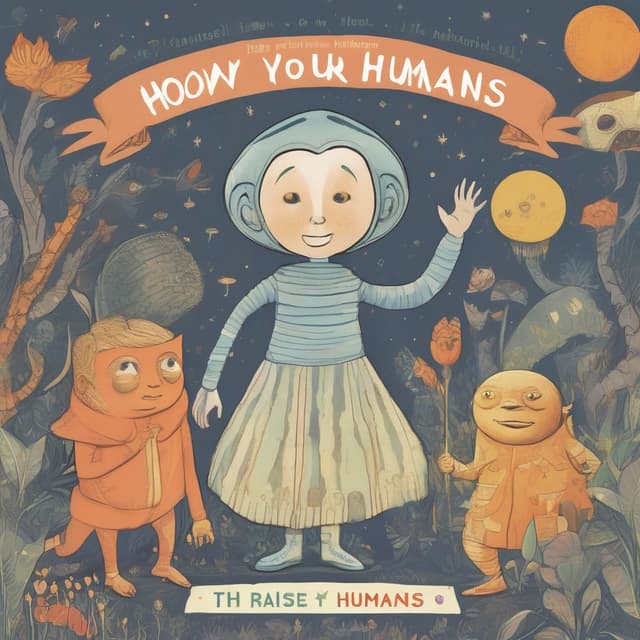
| Genre | Instructional, Humor |
| Title | How to Raise Your Humans |
| Author | N/A |
| Subjects | Human training • Human companionship • Interspecies relationships |
| Publisher | N/A |
| Description | A comprehensive guide to the art of raising and training human companions, covering best practices for caring for and shaping the development of your human, from establishing a positive relationship to socializing and addressing behavioral problems. |
| Publication date | N/A |
Humans are complex creatures, but with the right guidance and training, they can make wonderful lifelong companions. "Human raising" - the process of socializing, educating, and shaping the behavior of human beings - has long been an established practice, backed by a wealth of scientific research and practical expertise.
This comprehensive guide will walk you through every stage of human development, from bonding with a newborn to transitioning your human into a self-sufficient adult. Whether you're a first-time human owner or a seasoned trainer, you'll find the information and techniques you need to raise happy, well-adjusted humans.
The foundation of successful human raising is a strong, positive bond between you and your human. From the earliest stages, it's important to make your human feel safe, loved, and secure in your care. Engage in plenty of physical affection, eye contact, and one-on-one playtime to build trust.
Consistency is key - humans thrive on routine and clear boundaries. Establish a predictable schedule for feeding, sleeping, and activities. Use positive reinforcement to encourage good behavior, and be patient but firm when correcting undesirable actions.
Humans are highly social creatures, so early socialization is crucial for healthy development. Expose your human to new people, places, and experiences in a safe, structured way. This will help them become comfortable and confident in the world.
Training techniques like clicker training, luring, and shaping can be adapted to teach your human a variety of skills, from basic manners to more complex tasks. Be consistent, use positive reinforcement, and tailor your approach to your individual human's learning style.
Even the most well-raised humans can sometimes exhibit problematic behaviors. Address issues like aggression, anxiety, or stubbornness proactively with patient, humane interventions. Consult animal training experts or child development specialists if you encounter challenges you're unsure how to handle.
Remember that humans are intelligent, emotional beings. Punishment should be used sparingly, if at all. Focus instead on modifying the environment, setting your human up for success, and reinforcing the behaviors you want to see.
The ultimate goal of human raising is to guide your companion towards becoming a confident, self-sufficient adult. Slowly give your human more freedom and responsibility as they demonstrate readiness. Teach essential life skills like self-care, money management, and decision-making.
Maintain a supportive, mentorship role even as your human gains independence. Be there to provide advice, encouragement, and a safety net when needed. With the right preparation, you can feel proud watching your human thrive on their own.
The practice of human raising raises complex ethical questions. Critics argue that it objectifies humans, denies their autonomy, and can lead to abuse. Proponents counter that with proper care and training, humans can live happier, healthier lives.
As you embark on this journey, think deeply about the welfare and rights of your human. Consult experts, stay up-to-date on the latest research, and above all, treat your companion with dignity, empathy and respect. Human raising is a privilege, not a right.
